Tai-e Assignment 2: 常量传播和 Worklist 求解器
2026-07-10
1 实验内容
- 为 Java 实现常量传播算法。
- 实现一个通用的 worklist 求解器,并用它来解决一些数据流分析问题,例如本次的常量传播。
2 实验概览
基本上和上一个实验要做的事情一样,翻译下面这个算法:
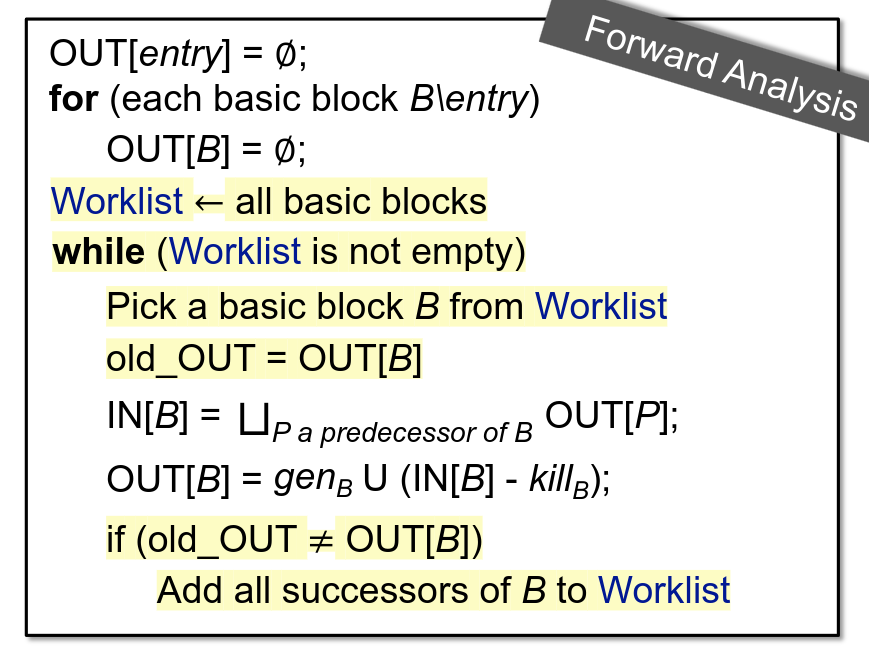
3 实验过程重点
构造 newBoundaryFact
在实现 newBoundaryFact() 的时候,要小心地处理每个会被分析的方法的参数。具体来说,要将它们的值初始化为 NAC ,这是因为常量传播算法是个保守的must分析,而方法的参数的值肯定会被定义,但是我们又不可能得知他是不是个常量(又或者说就算知道了也不可能知道是哪个具体常量)。
要做到这一点,我们就必须要知道一个方法中有哪些参数。
实验框架提供了 pascal.taie.ir.IR 这个类,里面有一个方法正好可以满足我们的需求:
/**
 * @return the parameters in this IR ("this" variable is excluded).
 * The order of the parameters in the resulting list is the same as
 * the order they are declared in the method.
 */
List<Var> getParams();
transferNode 中对于 function call 的处理
讲义上有个地方我觉得写得有问题:
- pascal.taie.ir.stmt.DefinitionStmt
这是 Stmt 的一个子类。它表示了程序中所有的赋值语句,(即形如 x = y 或 x = m(…) 的语句)。这个类很简单。你可以通过阅读源码来决定如何使用它。
我误以为 DefinitionStmt 都是由左值的,但是在看过源码之后发现并不是这样的:
public abstract class DefinitionStmt<L extends LValue, R extends RValue>
        extends AbstractStmt {

    /**
     * @return the left-hand side expression. If this Stmt is an {@link Invoke}
     * which does not have a left-hand side expression, e.g., o.m(...), then
     * this method returns null; otherwise, it must return a non-null value.
     */
    public abstract @Nullable L getLValue();

    /**
     * @return the right-hand side expression.
     */
    public abstract R getRValue();
}
可以看到 DefinitionStmt 是可以没有左值的。这一点让我在实现 transferNode 这里迷糊了很久。